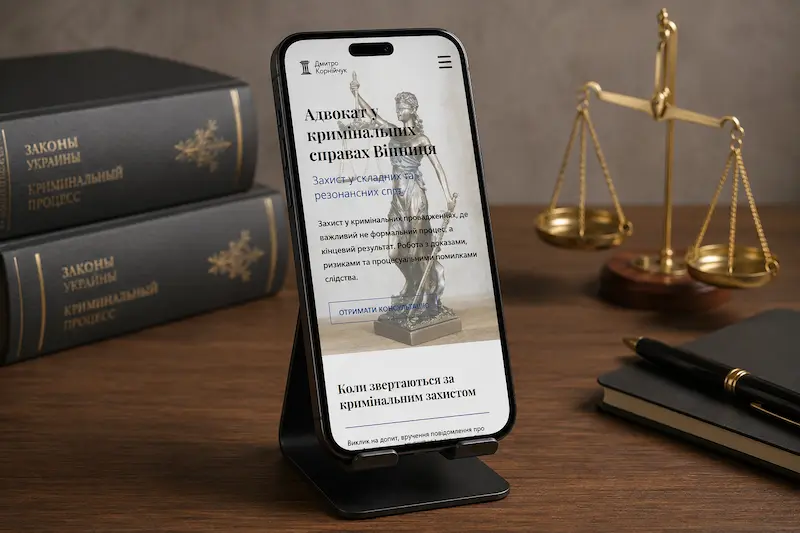
Lawyer Website Development and Promotion
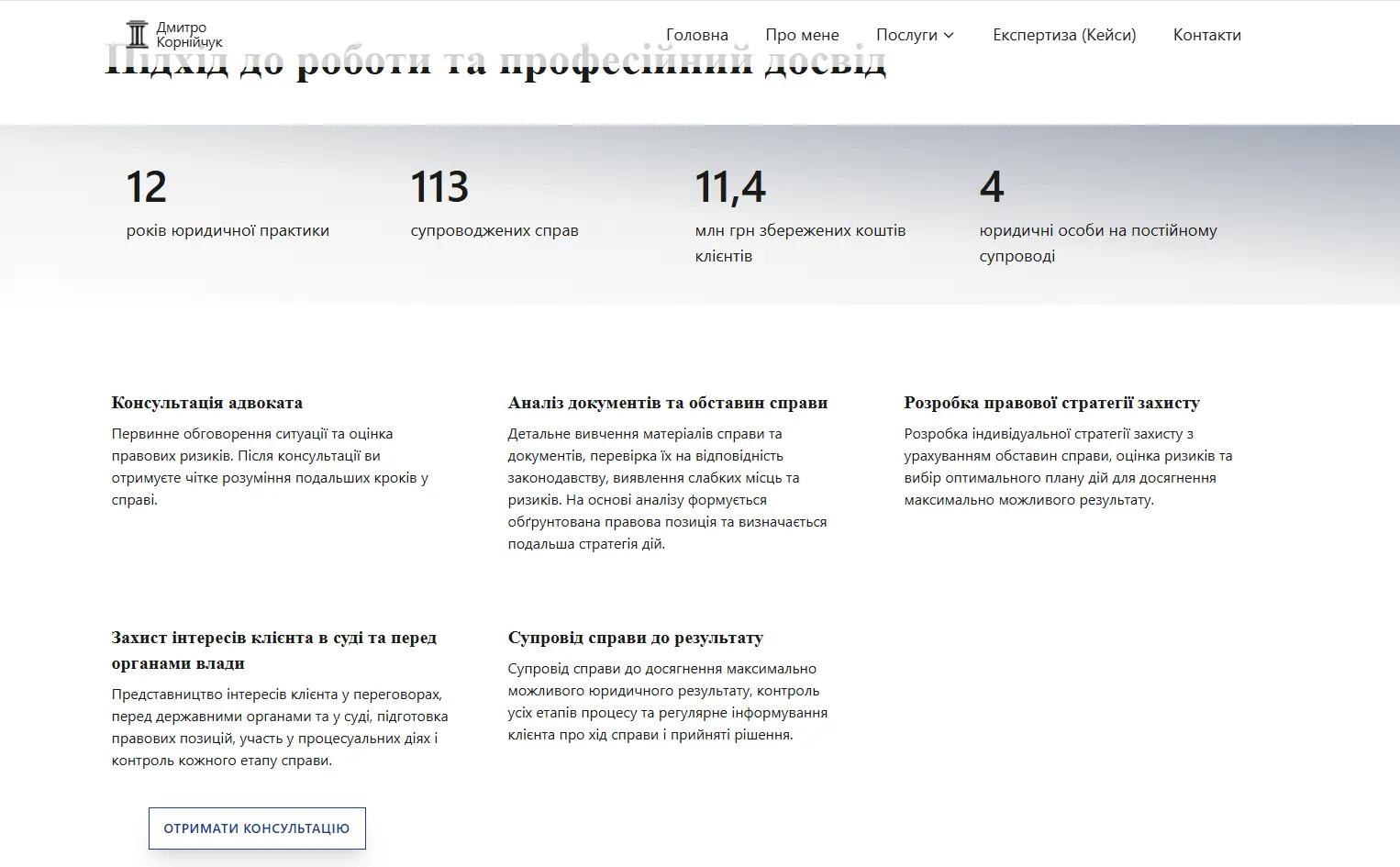
The lawyer's website was developed for clear presentation of legal services, building trust, and fast communication with clients. The interface is designed so that users can easily find the information they need and quickly request a consultation.
UX/UI design, well-structured pages, SEO, responsive layout, site speed optimization, and implementation of forms. The website is prepared for effective search engine promotion and convenient access to legal services online.
At this stage, we have only started SEO promotion work: basic optimization has been completed and semantic core expansion has begun. The project started as a brochure website development, but already now a полноценная structure is being formed for дальнейшего масштабирования, growth of Google rankings, and stable client acquisition.
advocate-korniichuk.com.uaCreating a Website for Presenting Legal Services
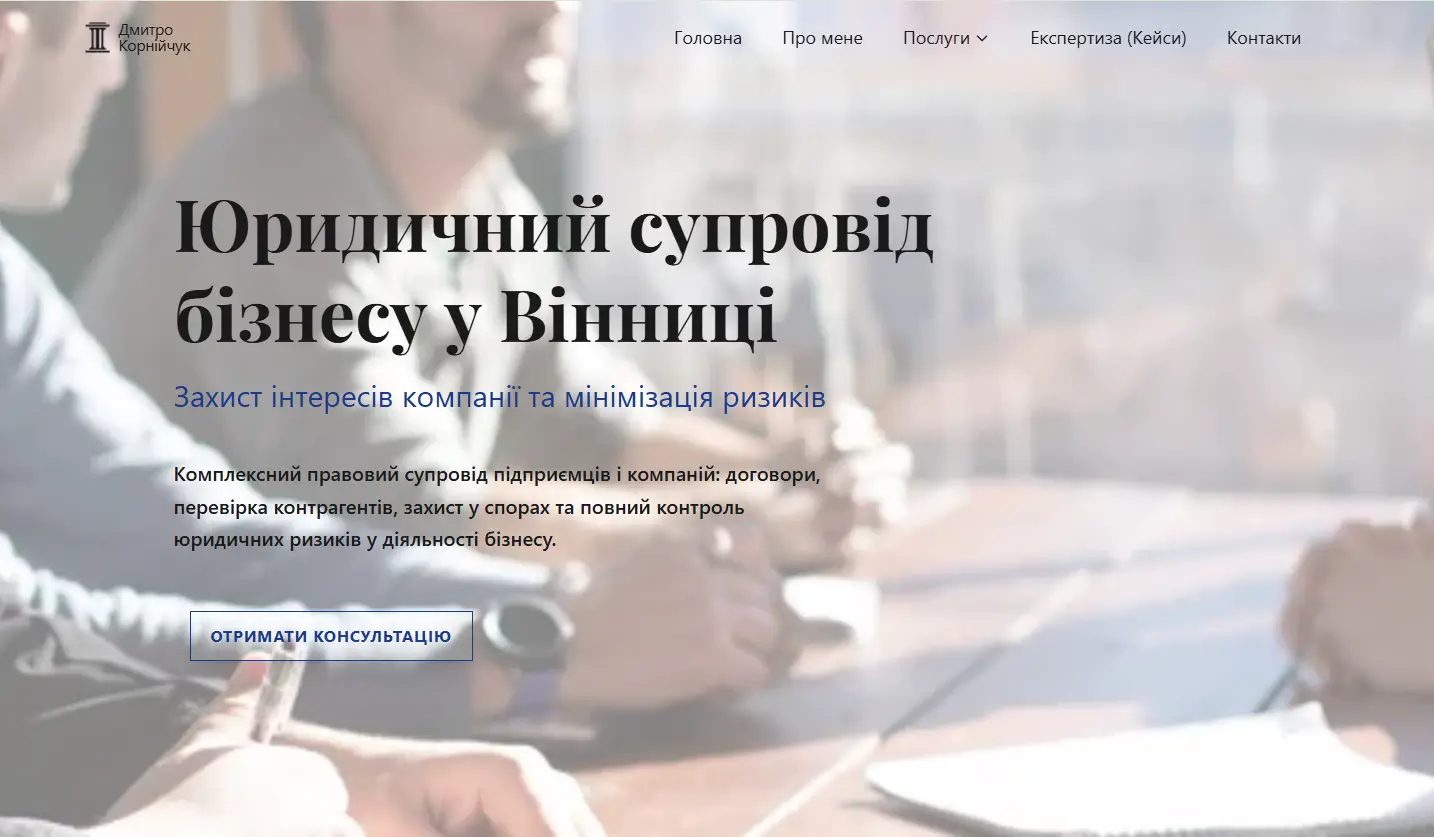
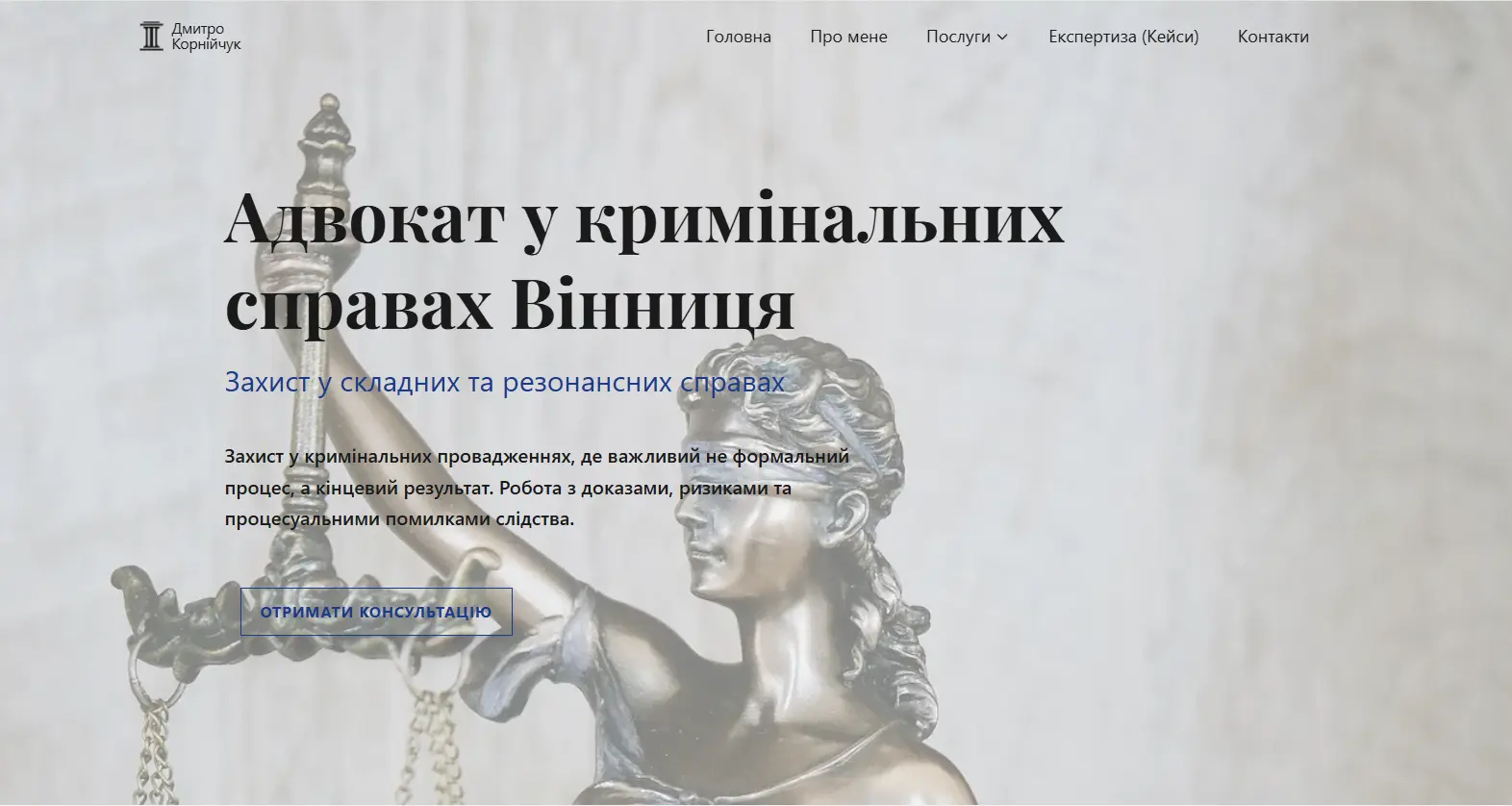
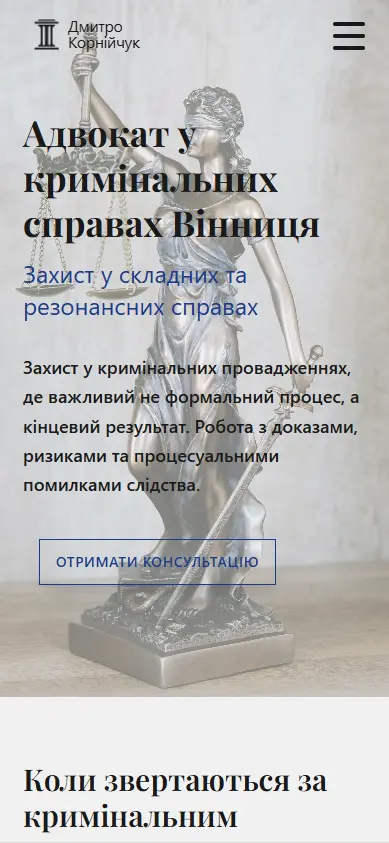
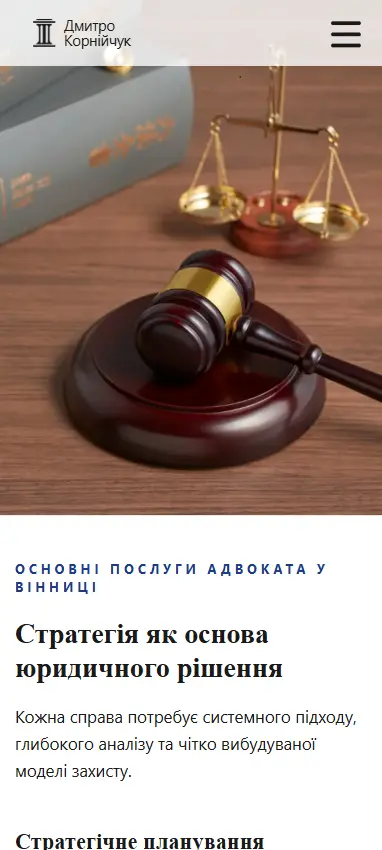
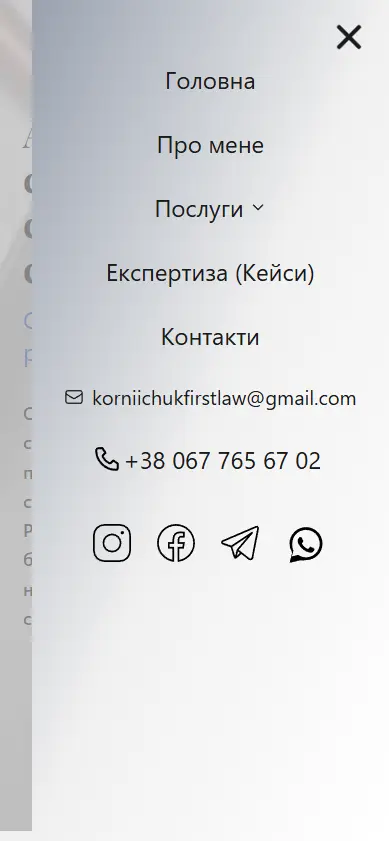
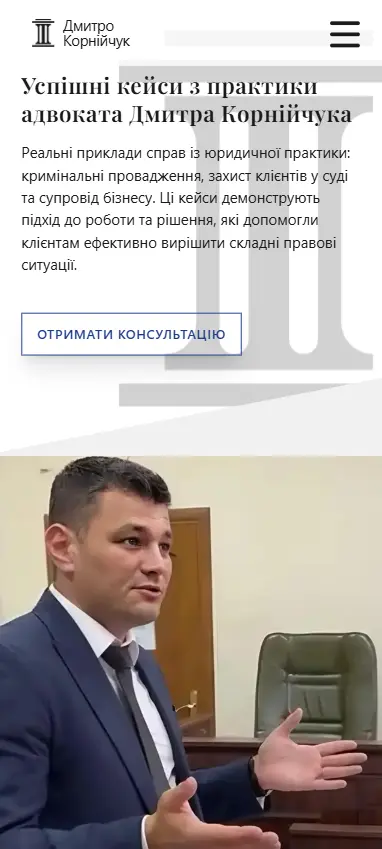
Creating a Mobile Version of the Website for Presenting Legal Services

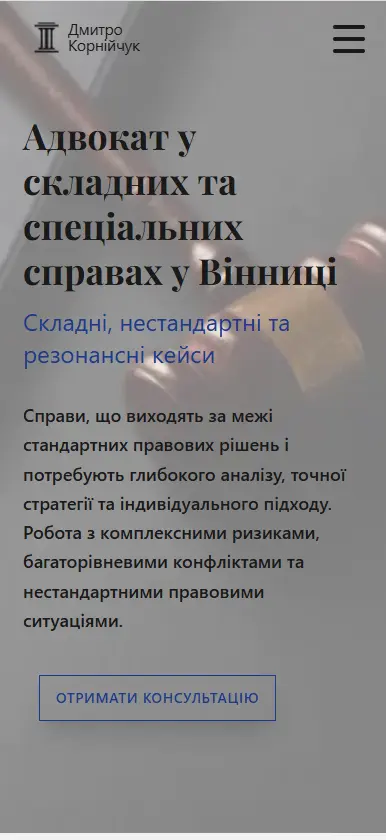
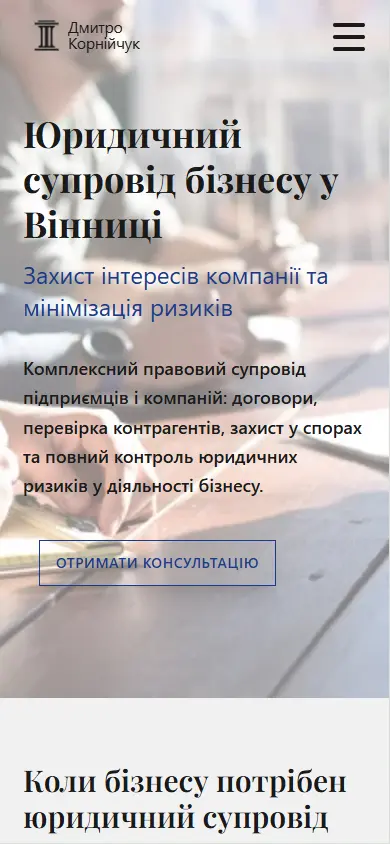
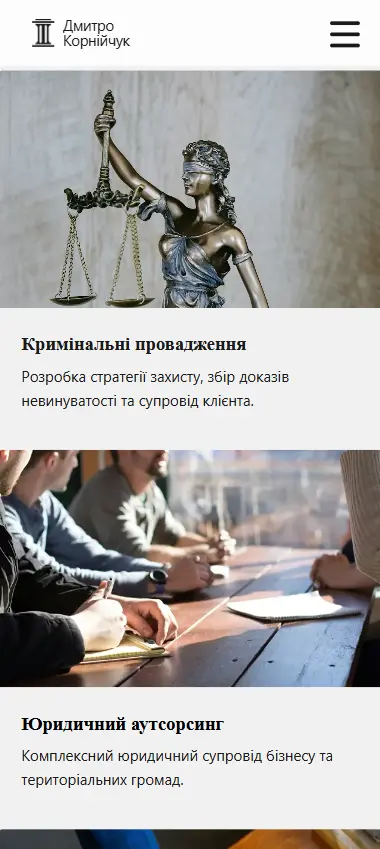

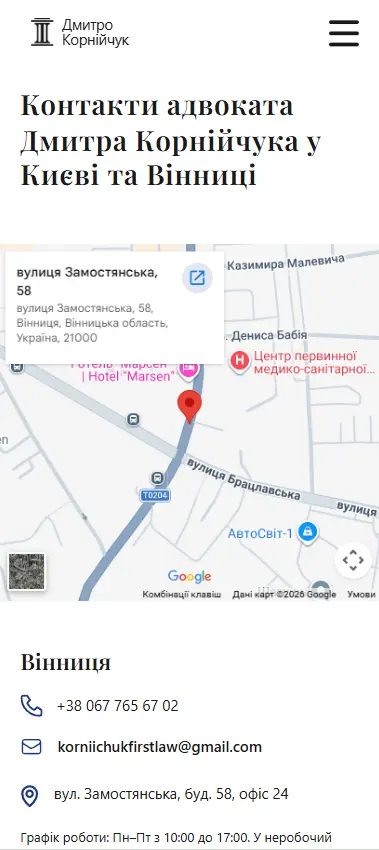

Legal Services Website Development
A lawyer’s website is not just an online business card, but a key tool for attracting clients from search engines. It helps clearly present legal services, builds trust, and creates a first impression of the specialist even before personal contact. Today, a potential client rarely makes a decision immediately after the first interaction. Usually, they first find the website on Google, study information about services, review cases or practice, check social media, and read reviews. Only after that do they decide to reach out. This process works as a unified system: if at least one element looks unprofessional or is missing, the level of trust significantly decreases, and the client may choose another lawyer. That is why a website should not just exist, but be well-structured, clear, and persuasive at every stage of interaction.
What a Legal Services Website Should Include
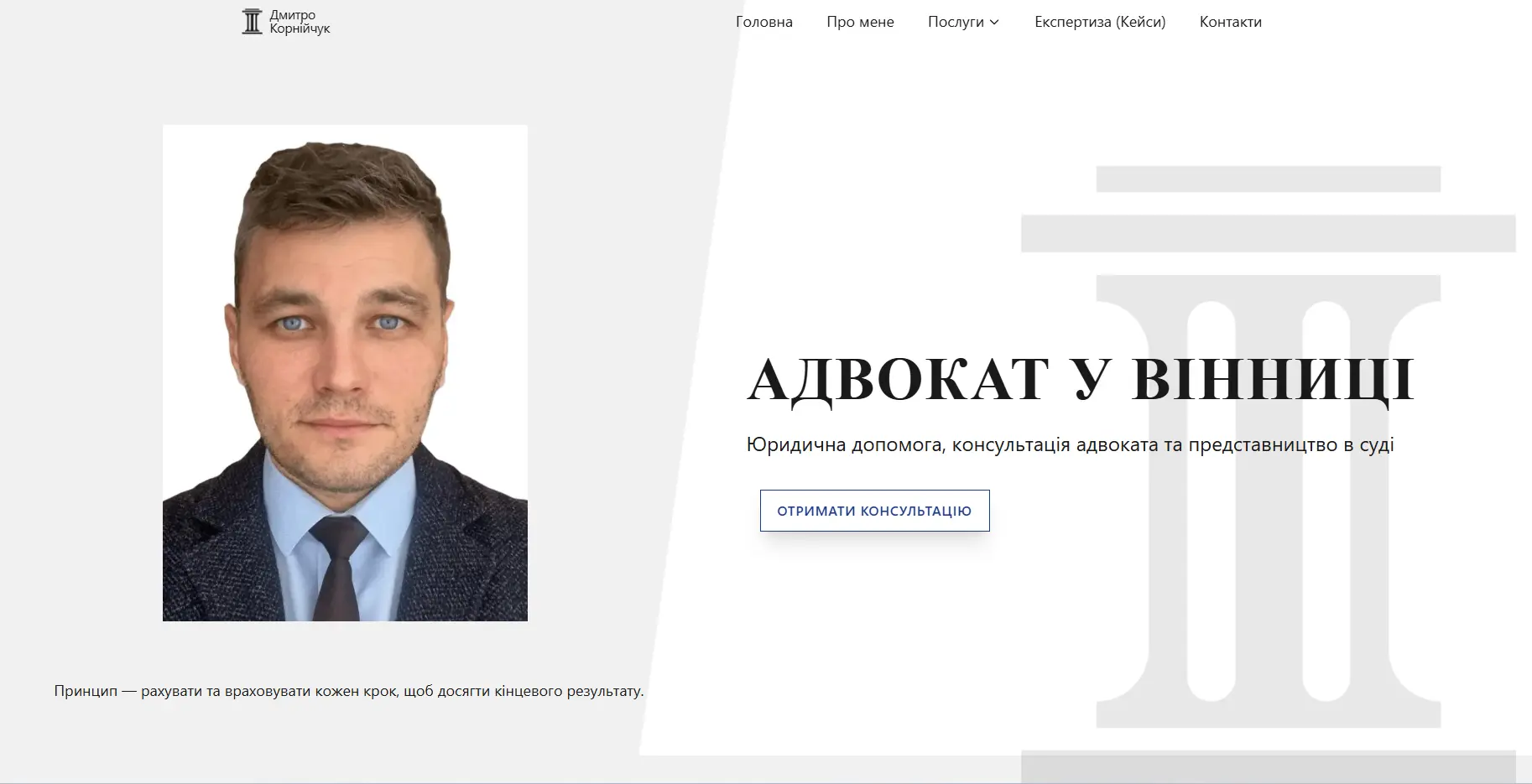
- A homepage as a central hub for general search queries (“lawyer”, “legal services”, “lawyer Vinnytsia”). It forms the first impression of the specialist, briefly presents key areas of expertise, builds trust, and through clear navigation and CTAs directs users to the relevant service.
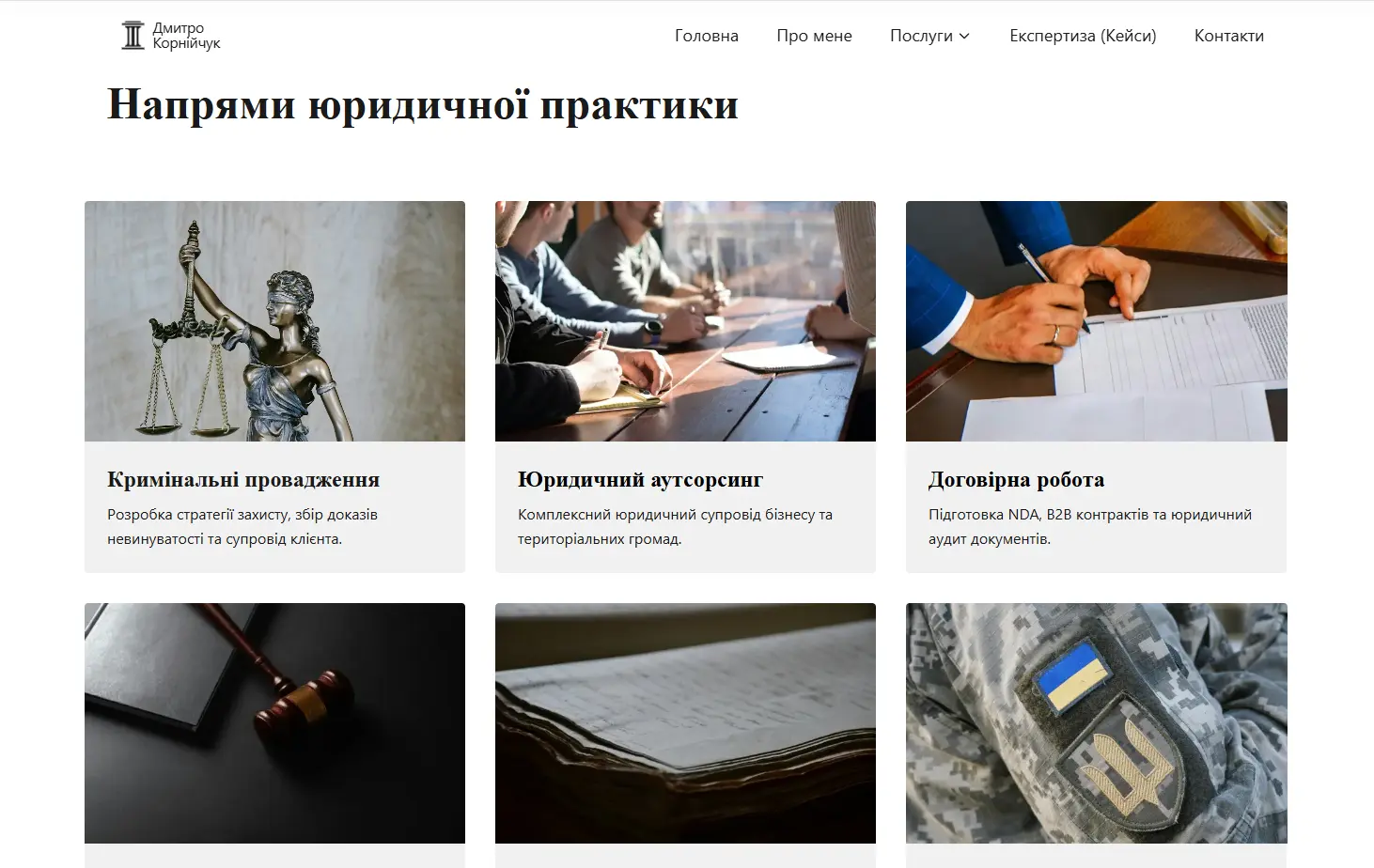
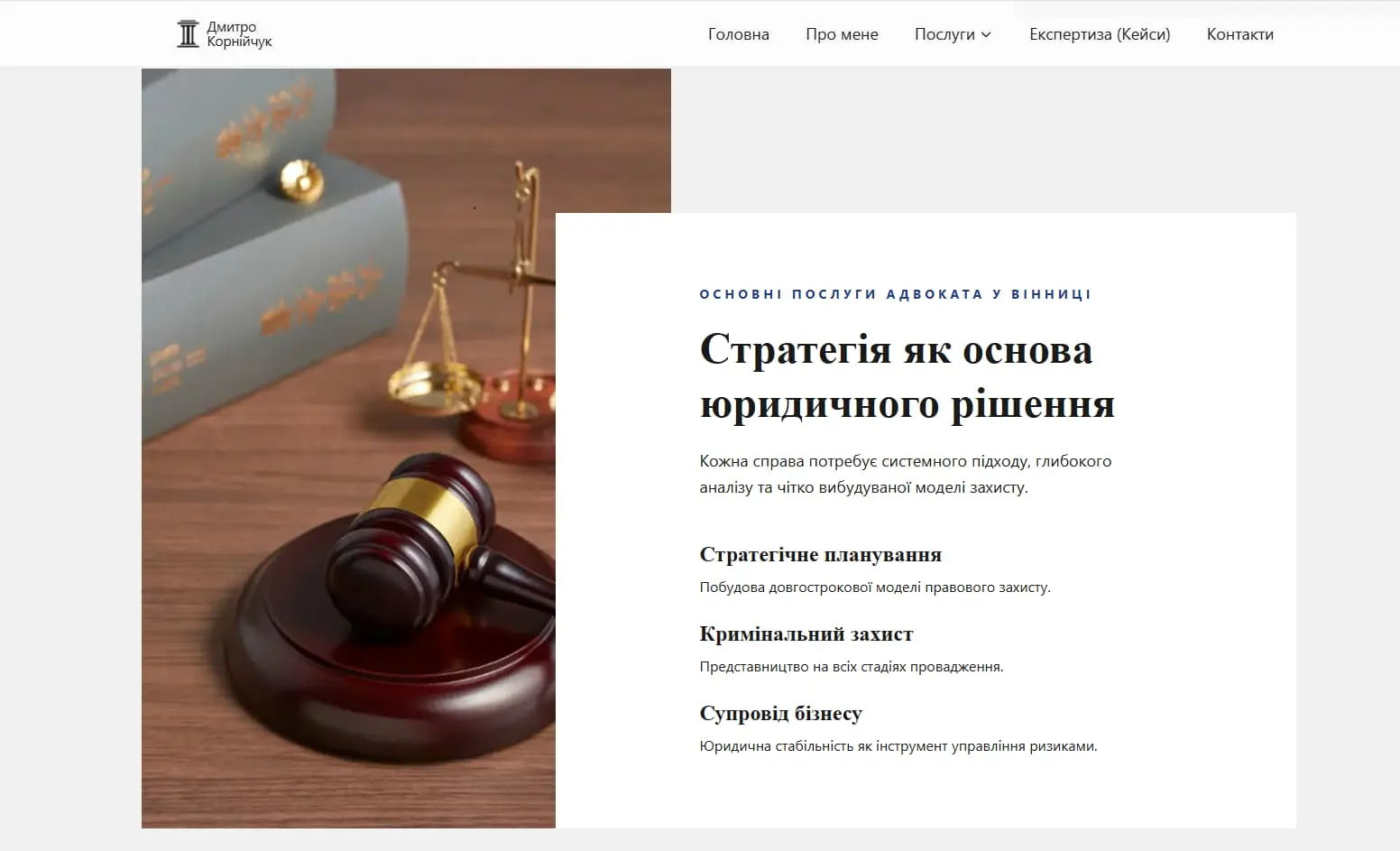
- Service pages with detailed explanations of each area (criminal cases, business legal support, lawyer for complex and specialized cases). These pages should not only describe the service but also explain typical client situations, the workflow, possible outcomes, and answers to common questions, helping to build trust and eliminate doubts before contact.
- Information about the lawyer that allows users to assess professional level: experience, specialization, approach to work, education, and practice. This is a key factor in decision-making, as clients choose a specific specialist, not just a legal service.
- Cases or examples of work with descriptions of the task, actions taken, and results. They demonstrate real experience, strengthen expertise, and help potential clients understand how their situation can be resolved.
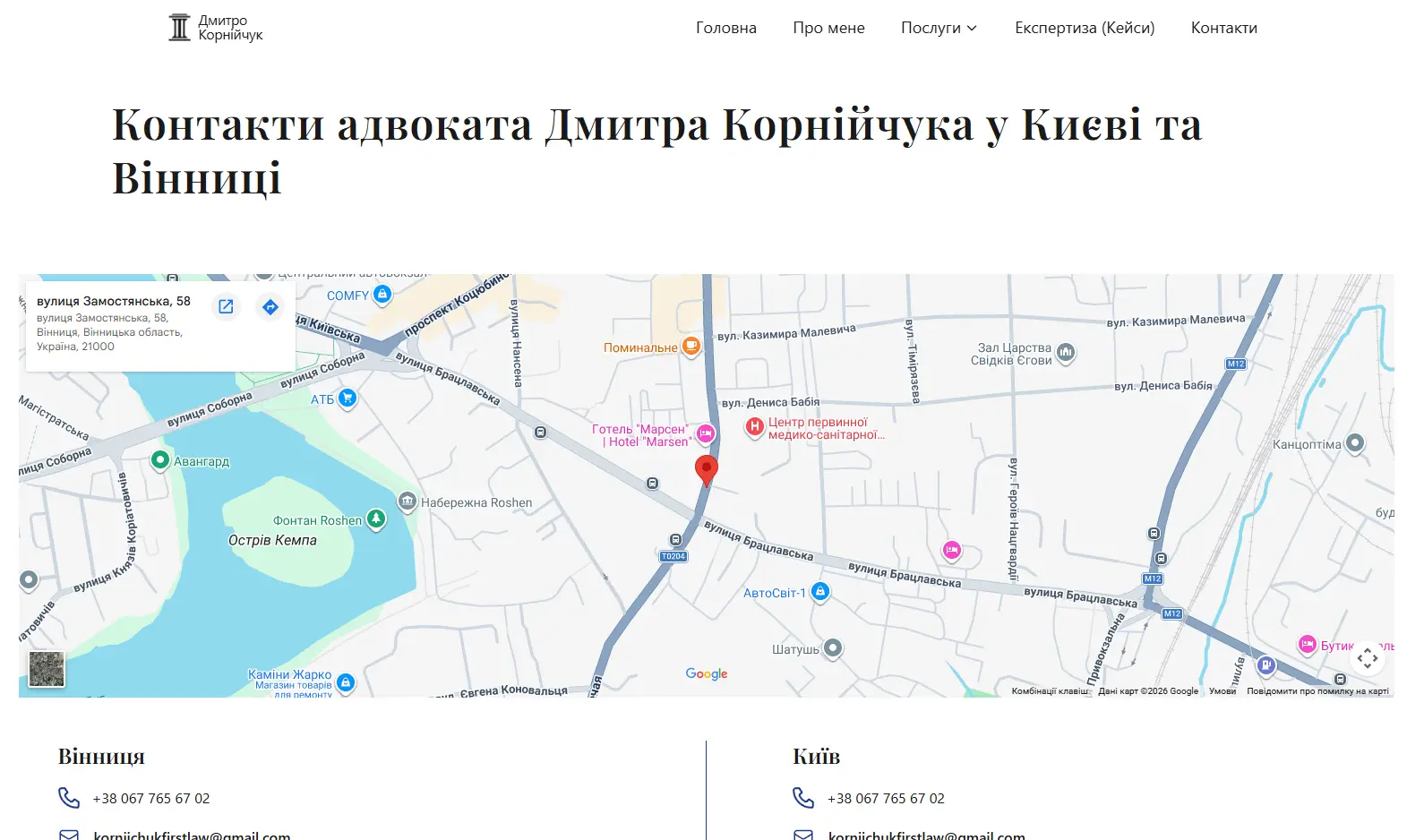
- Contact forms and contact details that provide a quick and convenient way to get in touch (phone, messengers, inquiry forms). Some users are not ready to call immediately, so simple forms with minimal fields significantly increase website conversion.
Will the Website Generate Clients from Google
A lawyer’s website can become a stable source of clients from Google, but only if a proper SEO foundation is implemented and continuous optimization is carried out. Key factors include a well-structured page hierarchy targeting specific queries, relevant content, internal linking, and technical optimization. In addition, regular content updates are essential: adding new service pages, case studies, or articles that expand keyword coverage. It is important to understand that SEO is a gradual process: initial results appear within a few months, but over time the website begins to generate stable and more cost-effective traffic compared to paid advertising.
Why the Mobile Version of the Website Is Important
Most users search for legal services from their smartphones, so a responsive website directly affects the number of inquiries. A user-friendly interface and fast loading speed help users quickly find the information they need and contact a lawyer.
Why You Should Choose a Custom Website Instead of a Template
Custom development allows you to create a website tailored to the specific needs of a lawyer: thoughtful structure, logical content blocks, and proper presentation of services. Unlike templates, such a website takes into account the specifics of the legal niche and client behavior. A unique design builds trust, highlights professionalism, and differentiates from competitors. As a result, the website looks like a serious business tool rather than a generic template.
How Many Pages Are Needed for SEO Promotion
The more high-quality pages a lawyer’s website has, the more search queries it can cover. Dedicated pages for each service allow faster growth in Google rankings and attract more targeted traffic.
The Convenience of Turnkey Website Development for a Lawyer
Turnkey website development allows you to get a ready-to-use client acquisition tool without the need to dive into technical details. All stages — from structure and design to responsive layout and basic SEO optimization — work as a unified system. As a result, the website is immediately ready for promotion, displays correctly on all devices, and provides a smooth user journey from the first visit to contact.
SEO Promotion of a Lawyer’s Website
Website development is only the first stage. For a website to start bringing in clients, continuous work on its development and SEO promotion is required. This is especially true for multi-page websites that can cover a large number of search queries. This process is also often referred to as website promotion.
Analysis of the Legal Services Niche and Competitors
At the first stage, we conducted an in-depth analysis of the legal services market and competitors. We studied websites that rank at the top of Google: their structure, number and types of pages, domain authority, backlink profile, and content. This allowed us to objectively assess the level of competition and develop a realistic strategy for promoting the lawyer’s website.
Collection and Clustering of Keywords for Legal Services
After analyzing the niche, we collected a full semantic core of queries: “lawyer”, “lawyer Vinnytsia”, “criminal lawyer”, “legal assistance”, and others. The queries were grouped by user intent (informational, commercial), and separate pages were created for each group. This became the foundation of a proper SEO website structure.
Creation of SEO Page Structure
Based on the clustered keywords, a logical website structure was developed with separate pages for each service area: criminal cases, business legal support, consultations, etc. This approach increases page relevance in Google and improves user navigation.
Meta Tags Optimization and Technical SEO
Unique meta tags (title, description) were created for each page with relevant keywords. In addition, basic technical SEO was implemented: canonical URLs were configured, structured data (JSON-LD) was added, hreflang was set up for multilingual pages, and indexing correctness was verified.
Writing SEO Content for Pages
Unique content was created for each page with natural use of keywords. The texts are designed not only for search engines but also for potential clients: they explain services, address objections, and guide users toward contacting.
Internal Linking of Pages
A logical internal linking structure was built between pages. This helps search engines better index the website, distribute link equity, and improve user behavior metrics.
Website Speed Optimization
Images, CSS/JS, and resource loading were optimized. This improved website speed and Core Web Vitals metrics, which are important ranking factors in Google.
Preparation for Indexing
Sitemap.xml, robots.txt were configured, and page accessibility for search engines was checked. This ensures proper indexing and faster appearance of pages in search results.
Off-Page SEO and Link Building
After basic optimization, work on off-page SEO was started: acquiring quality backlinks, listings in directories, and mentions on relevant websites. This increases trust from Google and helps improve search rankings.